

If you run a small to mid-sized fleet, you know the reality: you don’t have a dedicated “Director of Training” or an HR department to manage safety files. You are likely the dispatcher, the payroll clerk, and the safety manager all rolled into one.
Big competitors have resources, but you have something they don’t: speed and personal relationships.
At Raven, we believe that world-class safety doesn’t require a corporate boardroom. It requires a smart workflow. Based on industry-leading frameworks and adapted for the agility of smaller operations, here is how to build a driver coaching program that cuts costs, lowers insurance premiums, and gets your drivers home safe, without eating up your entire day.
Part 1: The Shift from “Gotcha” to “Guidance”
The biggest hurdle in introducing a coaching program is driver buy-in. It is a common myth that drivers hate cameras; the truth is, they hate unfairness.
For small fleets, culture is everything. You cannot afford an “us vs. them” mentality. The strongest argument for technology isn’t surveillance, it’s exoneration.
- The Old Way (Reactive): Waiting for a ticket, a complaint, or a crash to talk to a driver.
- The Raven Way (Proactive): Using technology to exonerate your drivers from false claims.
Your Pitch to Drivers:
“We aren’t installing cameras to catch you doing something wrong. We are installing them to prove you did it right. Data consistently shows that in accidents involving trucks and passenger vehicles, the passenger vehicle is at fault in over 80% of cases. This camera is your best witness against false claims.”
Part 2: Tech Leverage: How to Multiply Your Productivity
Because you have limited time, you can’t ride shotgun with every driver. You need technology that coaches for you.
The In-Cab Coach (The First Line of Defense)
For small organizations with fewer resources, in-cab coaching is your best friend.
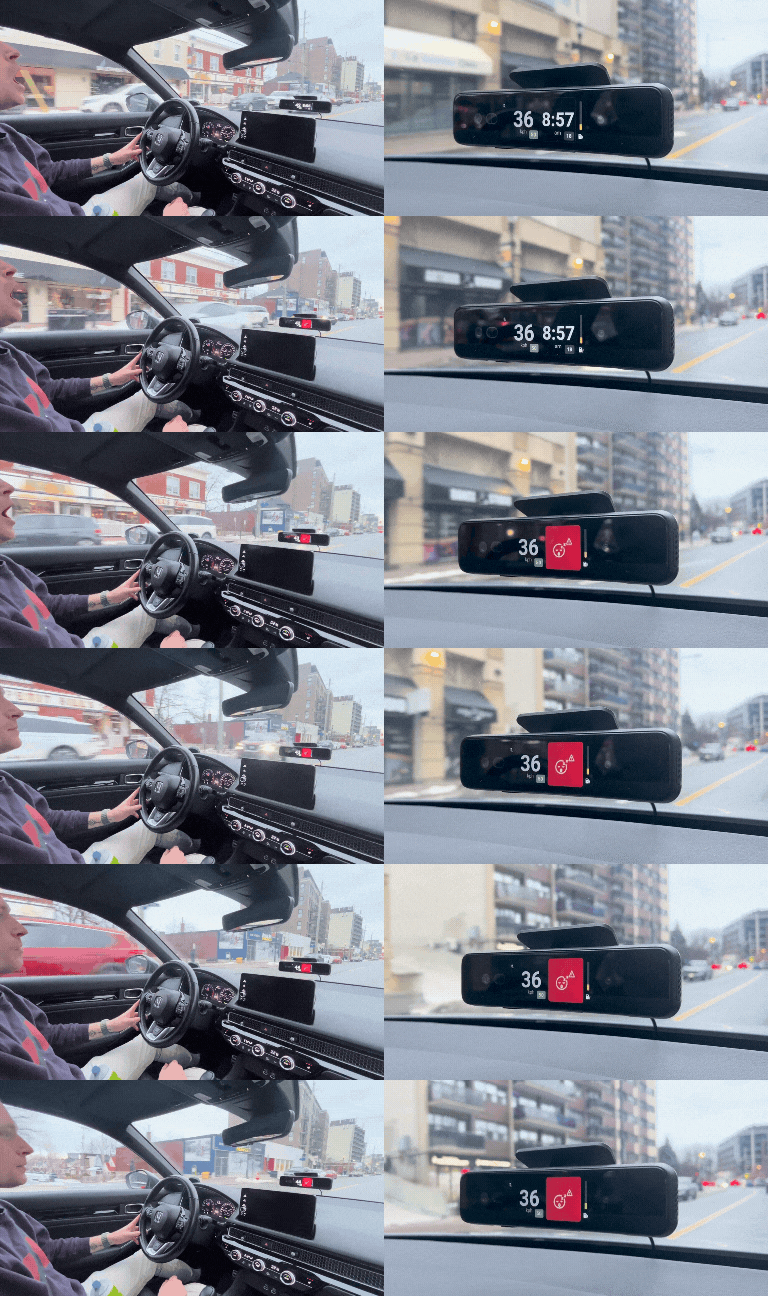
- How it works: AI-powered dash cams detect risky behavior (like tailgating or speeding) and play an immediate audio alert and visual notification to the driver.
- The Benefit: This allows the driver to “self-correct” in real-time. It fixes the behavior without you ever having to open a dashboard or make a phone call. Industry data from the NSTSCE indicates that proactive coaching and video telematics can reduce safety-related incidents by over 50%.
The Video Review (The Game Tape)
When a significant event happens, you need context. Video footage allows you to distinguish between a driver who needs coaching and a driver who was simply cut off in traffic.
Part 3: The “Feedback Loop” That Actually Changes Habits
You don’t need a degree in behavioral psychology to be a great coach; you just need to know that regular and repeated feedback is key. Most safety programs fail because they treat coaching like a tax audit, something scary that happens once a quarter.
To actually change how someone drives, you need to shift from random auditing to looping feedback. Here are the three rules of high-impact coaching:
Feedback Has a Short Shelf Life
If you wait two weeks to tell a driver they took a turn too fast, they won’t remember the road conditions, the traffic, or why they did it. They could become defensive.
Better to strike while the memory is fresh. Coaching is most effective when the driver can still remember what they were thinking in that moment. If you can’t address a behavior within 48 hours, let it go.
Be the Referee, Not the Gambler
In a casino, you only win sometimes. That’s why people keep gambling, they hope they get lucky. If you only correct speeding sometimes (when you’re in a bad mood or have extra time), your drivers will gamble. They wont think twice if the behaviour isn’t discouraged routinely.
Predictability creates safety. A referee blows the whistle every time the foot crosses the line, regardless of the score. When your team knows that the camera system is objective and consistent, they stop gambling with their safety habits. This isn’t to say that every time a driver is a mile over the speed limit they should be coached, but rather any time they exceed a limit you deem unacceptable within your organization. Creating an understood grace period feels much more collaborative and less likely to face push back from your team. Which leads nicely into our next ‘rule’.
Build “Relationship Capital”
Imagine you have a bank account with every driver. Every time you critique them, you make a withdrawal. If you haven’t made any deposits, you’re going to be overdrawn, and they will tune you out (or quit).
Catch them doing it right. Did a driver successfully navigate a tight construction zone without hitting a cone? Did they spot a hazard and slow down early? Did a client provide positive feedback? Send a quick note: “Great defensive move on I-95 today.” When you praise the good stuff, you earn the right to correct the bad stuff.
Part 4: The Coaching Workflow: Measured in Minutes
Large enterprises have complex workflows involving HR and unions. You need a workflow that fits between your morning coffee and your first dispatch. Try the triage method:
Step 1: The “Self-Coach” Check (Passive)
Without much time on your hands, you need your tools working for you. Tools like Raven have built-in self-coaching mechanisms. The cabin and road-facing cameras scan for risky driving behaviors, including tailgating and distracted driving, and issue visual and audible notifications to remind the driver that adjustments to their behavior are needed. These micro-adjustments help correct behaviors in the moment, reducing the need for formalized corrective coaching.
Step 2: The Morning Scan (5 Minutes)
Check your email for Raven’s daily summary report. Look for any “Red Flags” from the previous day. Is there anything that needs to be addressed immediately? This report acts as your daily brief. A quick glance empowers you to take urgent corrective action.
Step 3: The Review (10 Minutes)
Pick an interval that makes sense for you to review your fleet’s performance; weekly is a great starting point for quick reviews and quick catches of poor behavior. If a month or quarter has passed, a driver has likely forgotten about any incidents, and the coachable moment is long gone.
The Raven platform offers two easy tools to quickly review performance:
- Safety Score: Provides a glance at how your fleet is performing with a simple numerical score. Each driver or vehicle is also assigned an individual score for you to determine which drivers are in good standing and those that are a higher risk to your operation. It also provides a time horizon for you to view if your coaching is working and if scores are improving.
- Event Review: Allows you to drill down into the specific events that contribute to your driver’s score. Review high-risk events like harsh braking. Here, you can dismiss any events that are justified actions (slamming on the brakes to avoid a kid chasing a ball into the street). You can also set other flags, including ‘Coaching required’, and share instances with the driver for their review before a discussion takes place.
Step 4: The Conversation (15 Minutes)
If a behavior repeats or is severe, have the 1:1 conversation. But keep it structured.
- Give a heads up: Share the video and event details in advance of the meeting.
- Dedicate the time: Schedule a time with them to discuss the performance specifically.
- Show, don’t tell: Take emotion out of the equation, stick to the facts. Play the video. Give them the opportunity to provide input.
- Focus on skill gap: Is it a bad habit, or did they not know the rule?
- Agree on action: Get a verbal commitment on how to handle the situation next time.
Part 5: Measuring Success (ROI for the Little Guy)
You aren’t doing this for fun. You are doing it for the bottom line. Research supports the financial benefits of these programs:
- Insurance Savings: Video telematics can significantly lower insurance premiums by proving your fleet’s safety record.
- Crash Cost Reduction: Proactive video monitoring has been shown to reduce accident frequency and associated costs, with some studies citing reductions in incident frequency by up to 60%.
- Reputation Protection: If your vehicles are branded, poor driver behavior can trigger public complaints and damage your small business’s reputation before someone chooses to work with you. Making sure those calls stop or never happen in the first place is an invaluable revenue saver.
Part 6: The “Fun” Factor (Gamification)
Provide rewards and recognition to drivers who have the highest scores. Creating a positive environment around good drivers reframes the experience for your team and can even create friendly competition. “Driver of the Week” or “Driver of the Month” tied to incentives is a great place to begin.
Raven’s “Quick-Start” Coaching Checklist
- Week 1: Install Raven devices. Enable all events of interest, but keep in-cab audio OFF. Let drivers get used to the device.
- Week 2: Review data silently. Identify your top 3 riskiest drivers.
- Week 3: Turn on In-Cab Audio Alerts for critical events only (Tailgating/Distraction).
- Week 4: Begin 1:1 coaching sessions for repeat offenders using “The Workflow”.


Comments are closed