

April marks National Distracted Driving Awareness Month, a time for fleets to refocus on the behaviors that happen behind the wheel. As commercial vehicle technology evolves, the industry is moving away from traditional “post-incident” reviews toward a model of Proactive Prevention.
The Reality of the Road
According to the NHTSA, distracted driving claimed 3,208 lives in 2024 alone. Texting remains the most alarming distraction, sending or receiving a text takes a driver’s eyes off the road for an average of five seconds. At 55 mph, that is equivalent to driving the full length of a football field with your eyes closed.
For a fleet, these five second lapses are not just potentially financial liabilities, they’re massive safety risks. The stakes are higher for commercial vehicles, which are often:
- Heavier and Larger: The mass of a fleet’s van or truck means significantly longer braking distances than a standard car.
- Specialized Payloads: Carrying tools, equipment, or hazardous materials can shift the center of gravity, making sudden corrective moves more dangerous.
- Delayed Reaction Time: Compared to a normal passenger vehicle, the physical mechanics of heavy-duty braking systems means even a split-second delay in driver recognition can be the difference between a “close call” and a major collision.
Reactive Versus Proactive Safety
Most traditional telematics systems are reactive. They record a harsh braking event, upload the video, and a manager reviews it the next day. By then, the risk has already occurred.
Proactive safety aims to stop the behavior before the incident. Modern AI-enabled alert systems like Raven’s Driver Monitoring System (DMS) acts as a digital co-pilot, watching for the causes of accidents and notifying the driver instantly through audible and visual cues.
How Video Telematics Protects Drivers
Modern video telematics systems have evolved beyond dash cams. By utilizing advanced machine learning and cabin-facing sensors, these systems identify risks in real-time to prevent incidents before they occur:
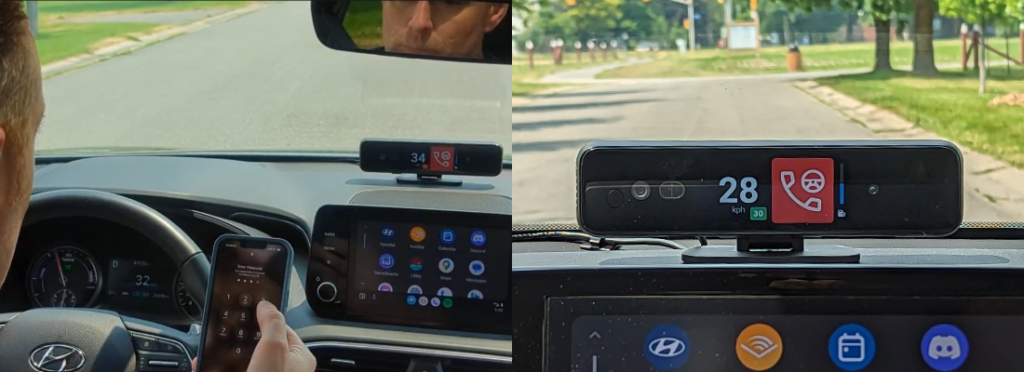
- Cellphone Use: Detects when a driver has a device in hand, addressing one of the leading causes of accidents
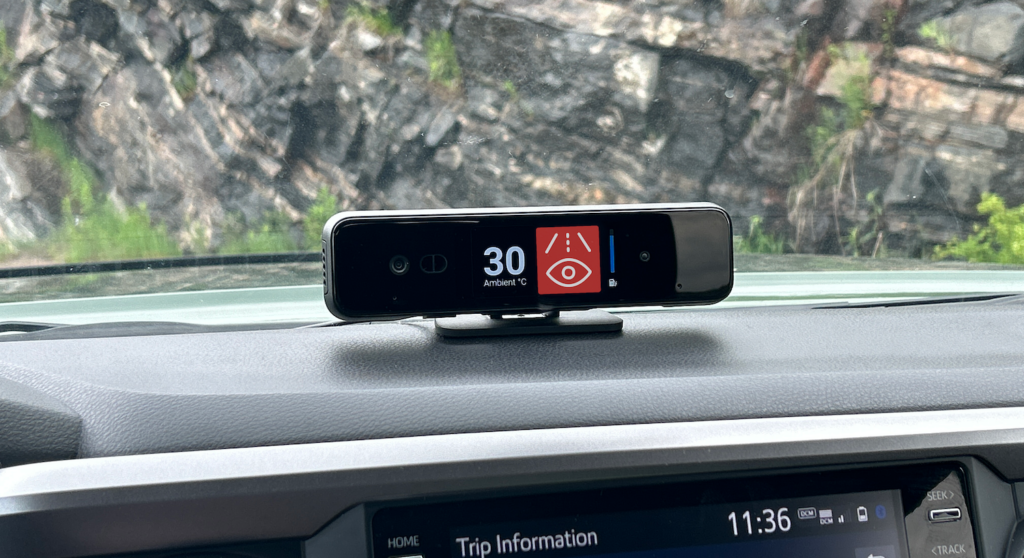
- Gaze Analysis: Monitors distracted driving, if the driver’s eyes shift away from the road for an unsafe duration.
- Fatigue Detection: Identifies signs of exhaustion, such as yawning or closed eyes to avoid driver drifting off behind the wheel.
- Manual Distractions: Recognizes behaviors like smoking, eating, or drinking that take hands off the wheel.
- Tailgating: Monitors following distance in real-time to ensure a safe buffer. When close following is combined with distracted driving, it creates a high-risk scenario where a collision becomes unavoidable.
The Power of the “Nudge”The most effective systems utilize an alert approach. When a distracted behavior is detected, the system triggers an immediate audible beep and a visual “toast” widget on the in-cab screen. This creates an immediate feedback loop, providing the driver with an opportunity to self-correct in the moment.
The Economic Case for Prevention
The financial impact of a single accident can be devastating. Beyond the immediate repair costs, fleets face “hidden” expenses. According to NHTSA, motor vehicle crashes drain over $340 billion from the U.S. economy annually.
Data from the FMCSA highlights how quickly costs escalate for commercial operators:
- Non-Injury Crashes: Average roughly $49,000 per incident.
- Injury-Related Crashes: Skyrocket to an average of $331,000.
Safety analysts warn of the “Iceberg Effect.” While vehicle repairs are visible at the surface, indirect expenses – including operational downtime, administrative labor, and reputational harm – can be several times higher than the actual vehicle repair bill. By prioritizing a real-time coaching system, fleets aren’t just adding hardware to their vehicles; they are protecting their operational budget and long-term viability.
Safety is a Daily Commitment
Distracted Driving Awareness Month is an important reminder, but on the road, safety must be a daily standard. Moving from reactive video reviews to proactive real-time coaching allows fleets to protect their most valuable assets: their drivers.


Comments are closed