
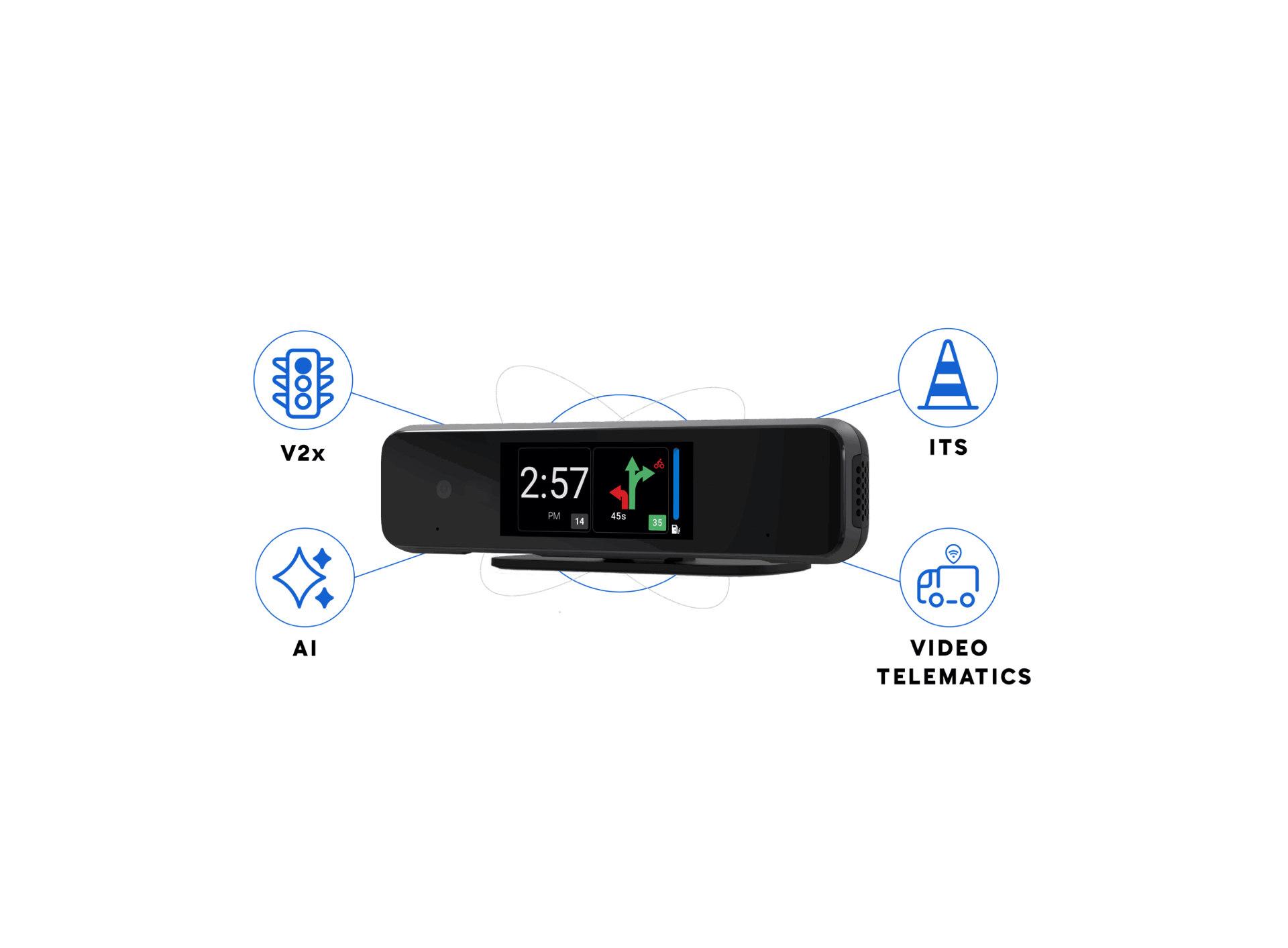
Following last year’s demonstration at ITS World Congress with Verizon Business and ESRI Canada, which focused on Work Zone edge-AI detection, characterization and V2X messaging, Raven Connected recently had the opportunity to demonstrate a broader range of V2X applications and use cases at the Federal Highway Administration’s (FHWA) Turner-Fairbank Highway Research Center (TFHRC) to representatives from the U.S. Department of Transportation (U.S. DOT) and the Saxton Laboratory team, operated by Leidos.
This session served as an in-depth showcase for the Raven On-Board Unit (OBU), moving beyond Work Zones to validate a comprehensive suite of Connected Vehicle (CV) message sets within a live infrastructure environment.
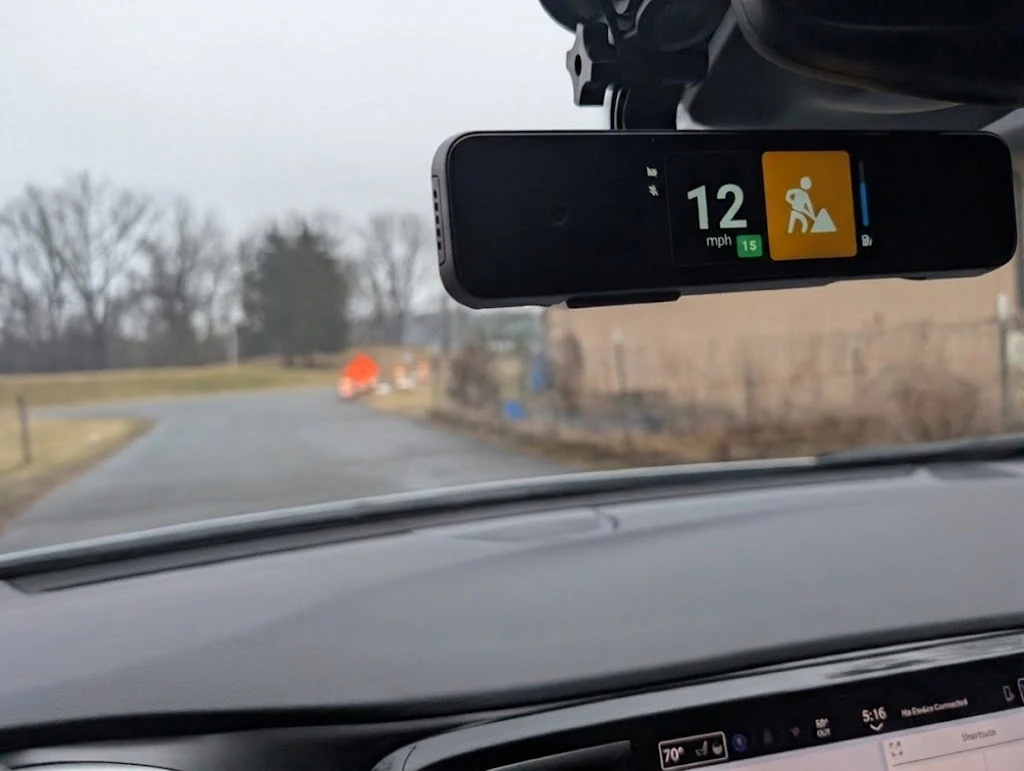
Expanding the V2X Scope: Beyond Work Zone Detections
While our previous work established the ability of Raven to both receive and send Traveler Information Messages (TIMs) and leverage onboard AI to validate their status (confirming active workzones or clearing expired ones), the TFHRC demonstration showcased our platform and OBU’s maturity as a full-stack V2X node. The demonstration focused on the device’s ability to parse, process, and react to a broad array of real-time data. Interoperability with a range of data sources and compliance with standards is critical.
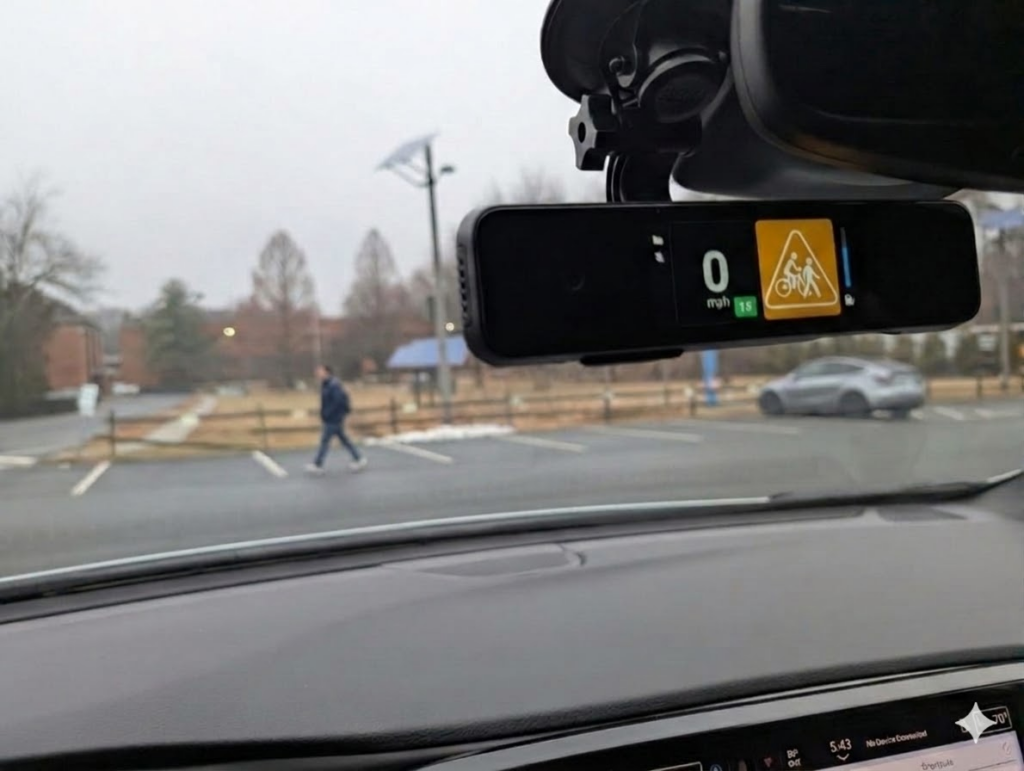
Key Capabilities:
- VRU Notification: Real-time alerts of Vulnerable Road Users to enhance pedestrian and cyclist safety.
- Dynamic Work Zone Management: Automated detection, driver notification, and clearing of work zone locations via edge-AI.
- Emergency Service Detection: Validation of the OBU’s ability to receive and prioritize alerts from approaching emergency vehicles, ensuring low-latency driver notification and improved situational awareness.
- SPaT and MAP Ingestion: Processing of Signal Phase and Timing (SPaT) and intersection geometry (MAP) data, allowing the OBU to provide precise “Time-to-Green” cues and intersection safety alerts based on the vehicle’s exact spatiotemporal position.
Technical Architecture: The “Light-Lift” OBU Advantage
The Raven OBU will undergo evaluation by the federal body for its unique position as an aftermarket solution that meets the technical rigors of V2X standards. By controlling the complete technology stack, we demonstrated that high-fidelity V2X does not require complex, specialized hardware installs or waiting for OEM vehicle manufacturer adoption. This flexibility enables extensible workflows, early adoption, and interoperability.
- Low-Latency Interoperability: The OBU maintains stable communication with data networks, highlighting that mobile-network V2X can deliver the reliability required for a plethora of applications and safety-critical message sets.
- Edge-to-Cloud Handshake: We showcased how the device interacts to manage and distribute real-time transportation events, serving as both a consumer, creator, and validator of ITS and V2X data.
- Hardware Reliability: The demonstration confirmed the OBU’s ability to handle concurrent processing of proprietary AI models and SAE J2735 message stacks without performance degradation, with easy, over-the-air updates as new functionalities become available.
Why Raven is a Catalyst for State and Local V2X Deployment
For state and local agencies, the hurdle to V2X (Vehicle-to-Everything) adoption hasn’t just been the technology, it’s been the cost and complexity of deployment. Raven changes that by providing a low-cost, high-performance, aftermarket solution that integrates into existing vehicles and workflows, bridging the gap between ambitious safety goals and constrained budgets.
Beyond the technical stack, Raven offers immediate operational utility for DOTs and public works departments:
- Zero-Touch Fleet Modernization: Unlike integrated systems that require new vehicle procurement, Raven can be deployed across mixed-model year maintenance trucks, transit buses, and first responder vehicles overnight.
- Automated Asset Management: Agencies can use Raven’s edge AI to automatically map and report infrastructure conditions, including work zones, illegal dumping, sign damage, and road quality, in real time. This eliminates the need for manual and costly inspector “drive-bys” to verify that contractors have cleared a site, saving labor hours and reducing fuel costs.
By lowering the barrier to entry, Raven allows agencies to stop “piloting” and start “deploying.” It allows every vehicle to take advantage of the billions in ITS and Smart City infrastructure that has been deployed over the past decades, and contributes to an ever evolving intelligent and responsive transportation network.
Join the Conversation
Stay ahead of the curve on connected vehicle standards and deployment strategies by exploring these federal resources:
- Explore V2X Deployment: U.S. DOT V2X Research
- Professional Capacity Building: ITS PCB Resources
Want to see Raven in action? Reach out to us at gov@ravenconnected.com to discuss how our OBU can integrate into your specific fleet operations and safety goals.


Comments are closed